|
Cause Of EMS Shrimp Disease Identified
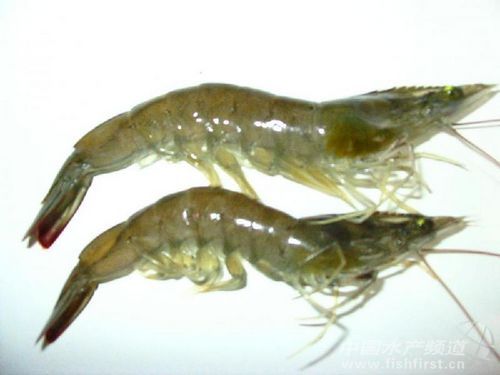
After months of investigation by a research team led by Donald Lighter at the University of Arizona, the elusive pathogen causing early mortality syndrome (EMS), an emerging shrimp disease in Southeast Asia more technically known as acute hepatopancreatic necrosis syndrome (AHPNS), has been identified.
The researchers found that EMS is caused by a bacterial agent, which is transmitted orally, colonizes the shrimp gastrointestinal tract and produces a toxin that causes tissue destruction and dysfunction of the shrimp digestive organ known as the hepatopancreas. It does not affect humans.
Lightner’s team identified the EMS/AHPNS pathogen as a unique strain of a relatively common bacterium,Vibrio parahaemolyticus, that is infected by a virus known as a phage, which causes it to release a potent toxin. A similar phenomenon occurs in the human disease cholera, where a phage makes the Vibrio cholerae bacterium capable of producing a toxin that causes cholera’s life-threatening diarrhea.
Research continues on the development of diagnostic tests for rapid detection of the EMS/AHPNS pathogen that will enable improved management of hatcheries and ponds, and help lead to a long-term solution for the disease. It will also enable a better evaluation of risks associated with importation of frozen shrimp or other products from countries affected by EMS.
Some countries have implemented policies that restrict the importation of frozen shrimp or other products from EMS-affected countries. Lightner said frozen shrimp likely pose a low risk for contamination of wild shrimp or the environment because EMS-infected shrimp are typically very small and do not enter international commerce. Also, his repeated attempts to transmit the disease using frozen tissue were unsuccessful.
Since EMS was first reported in China in 2009, it has spread to Vietnam, Malaysia and Thailand, and now causes annual losses more than U.S. $1 billion. EMS outbreaks typically occur within the first 30 days after stocking a newly prepared shrimp pond, and mortality can exceed 70%.
In an effort to learn from past epidemics and improve future policy, the World Bank and the Responsible Aquaculture Foundation, a charitable education and training organization founded by the Global Aquaculture Alliance, initiated a case study on EMS in Vietnam in July 2012. Its purpose was to investigate the introduction, transmission and impacts of EMS, and recommend management measures for the public and private sectors.
The study team included Lightner, who with University of Arizona co-workers recently identified the EMS/AHPNS pathogen. At a panel discussion on EMS at the Global Aquaculture Alliance’s GOAL 2012 meeting in October 2012, Lightner and Timothy Flegel speculated that the elusive nature of the disease might be explained by a bacteriophage.
EMS is among the topics that will be addressed at GAA’s GOAL 2013 conference in Paris, France, from Oct. 7 to 10. GAA:EMS病原已被證實 中國水產頻道獨家報道,2013年5月1日 -全球水產養殖聯盟(GAA)在周三宣布,亞利桑那大學Donald Lighter所領導的研究團隊經過數月的調查研究,發現了導致早期死亡綜合癥(EMS)的病原體。在東南亞,這種新興的疾病被稱為急性肝胰腺壞死綜合征(AHPNS)。 研究人員發現,EMS的病原體是一種細菌。該菌通過攝食傳播,寄生在蝦消化道,并產生毒素。這種毒素能夠引起組織的破壞和肝胰腺(蝦的消化器官)功能紊亂,但不會影響人類。 Lightner的研究小組證實了EMS/ AHPNS的病原體是一類比較常見菌屬的獨特菌株——副溶血弧菌,經噬菌體感染后,它會釋放出強毒性的毒素。類似的現象發生在人類身上就是霍亂,其原理是噬菌體寄生使得霍亂弧菌能夠產生一種毒素,導致感染者產生嚴重腹瀉,從而危及生命。 GAA說研究團隊將繼續致力于開發快速檢測EMS / AHPNS病原體的方法,從而提高孵化場和養殖場的對該病的管理能力,進而找到長期的解決方案。同時,這種快速的檢測方法也將有利于受EMS影響國家生產的冷凍蝦或其他相關產品更好地通過出口的相關的風險評估。 有些國家已經實施了限制從受EMS影響的國家進口的冷凍蝦或其他產品的政策。但研究表明,冷凍蝦可能對野生蝦或環境的污染影響不大,因為EMS感染的蝦通常都非常小,不會進入國際貿易。此外,研究組反復嘗試使用含菌冷凍組織感染健康個體的實驗也均告失敗。 EMS是2009年在中國首次報道,現在已經蔓延到越南,馬來西亞和泰國,每年造成的損失超過10億美元。EMS通常暴發在養殖時間不超過30天的蝦塘里,死亡率超過70%。 為吸取過往流行病經驗,以改善未來疾病狀況,世界銀行和Responsible Aquaculture Foundation(負責任的水產養殖慈善基金會,由全球水產養殖聯盟成立的教育和培訓機構)于2012年7月在越南發起EMS的病例研究。其目的是調查EMS的傳染源,傳播途徑和影響,并為公共與私營單位提供相應管理措施建議。 該研究團隊的Lightner與亞利桑那大學的同事最近確定了EMS/ AHPNS病原體。在2012年10月舉行的全球水產養殖聯盟峰會上,在小組討論中Lightner和Timothy Flegel曾預測EMS這種令人難以捉摸的疾病可能與噬菌體相關。 定于2013年10月7日到10日在法國巴黎舉行的GAA會議上,關于EMS的研究將被繼續探討。(譯/中國水產頻道 羅丹 郭金鳳) 中國水產頻道(www.fuqitext.com )獨家報道,轉載請說明出處,違者追究法律責任, 謝謝合作。 |
| 重點推薦 |
| |
 微博互動
微博互動免責聲明:
1、凡本網注明“來源:水產前沿網”的所有作品,均為水產前沿網合法擁有版權或有權使用的作品,未經本網授權不得轉載、摘編或利用其它方式使用上述作品。已經本網授權使用作品的,應在授權范圍內使用,并注明“來源:水產前沿網”。違反上述聲明者,本網將追究其相關法律責任。
2、凡本網注明“來源:XXX(非水產前沿網)”的作品,均轉載自其它媒體,轉載目的在于傳遞更多信息,并不代表本網贊同其觀點和對其真實性負責。
3、如本網轉載涉及版權等問題,請作者在15天內來電或來函與水產前沿網聯系。聯系方式:020-85595682。